
天龙八部
Pony.ai’s autonomous-driving distance tops 100m km as China scales up L4 commercialization_我的网站

一 |
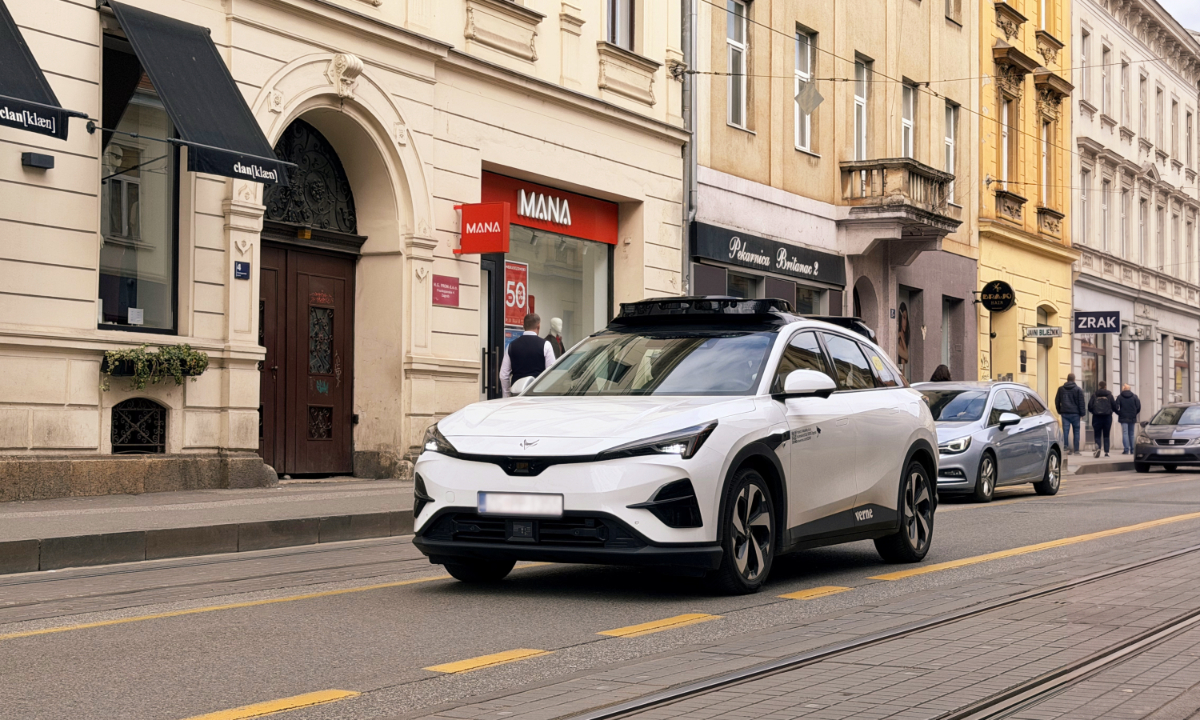
Chinese autonomous-driving company Pony.ai said on Monday that its cumulative autonomous-driving distance worldwide has surpassed 100 million kilometers, marking the latest milestone as China's driverless sector moves from technology validation toward mass production and scaled commercial deployment.
The milestone comes as L4 autonomous driving gains commercial traction across passenger transport and logistics in China, while Chinese companies are accelerating overseas deployment through partnerships with local operators in markets including Europe and Southeast Asia.
Industry experts said that the significance goes beyond rising distance. As commercialization gathers pace, the next phase of competition will increasingly hinge on whether autonomous-driving technology can be deployed at scale, brought down to commercially viable costs and replicated across different transport scenarios and markets.
At a recent media briefing, Pony.ai said that its fourth-generation L4 autonomous electric heavy-duty truck had entered mass production, with commercial operations expected to begin in the coming months. The company plans to deploy 500 to 1,000 trucks over the next two to three years across long-haul freight, bulk cargo transport and port logistics.
A notable part of that transition is the sharp decline in costs. Autonomous-driving hardware costs for Pony.ai's fourth-generation heavy truck are about 70 percent lower than for the previous generation, according to the company.
Similar cost reductions are also emerging in robotaxis. Pony.ai said on its official blog that the bill-of-materials cost of the autonomous-driving kit for its seventh-generation robotaxi has fallen 70 percent from the previous generation, helping the company achieve unit-economics breakeven in Guangzhou and Shenzhen, South China's Guangdong Province.
China's autonomous-driving sector is moving from technology validation to large-scale commercial deployment, underpinned by the rapid accumulation of real-world driving data, Pan Helin, a member of the Expert Committee for the Ministry of Industry and Information Technology, told the Global Times on Monday.
"Continuous road testing allows L4 systems to better adapt to local traffic conditions, laying the groundwork for wider commercial use," Pan said.
China has opened multiple cities to autonomous-driving applications, with commercialization gathering pace. As deployment expands and marginal technology costs fall, autonomous driving is expected to unlock significant commercial value and emerge as a new form of mobility, veteran industry analyst Liu Dingding told the Global Times.
Pony.ai aims to expand its robotaxi fleet to more than 3,000 vehicles by the end of 2026 and operate in 20 cities worldwide, with nearly half of those cities overseas. It also plans to develop an international version of its seventh-generation robotaxi tailored to different regulatory requirements and infrastructure, supporting the deployment of more than 1,000 vehicles in overseas markets.
Pony.ai's ambition also reflects a broader push by Chinese autonomous-driving companies to expand overseas.
On August 3, WeRide announced a partnership with Danish shared-mobility platform GreenMobility to deploy autonomous ride-hailing services in Denmark, marking its first entry into the Nordic region and sixth European market. Subject to regulatory approval, the service is expected to open to the public in the first half of 2027 using WeRide's latest GXR L4 robotaxi.
WeRide said on its website that its autonomous-driving products are now deployed in more than 40 cities across 12 countries. The company holds autonomous-driving permits in eight markets and operates a global L4 fleet of more than 3,000 vehicles.
A similar expansion is taking place in public transport. On July 17, Chinese autonomous-driving company MOGOX announced a strategic partnership with Singapore-based ComfortDelGro Bus. The two companies will cooperate on autonomous-vehicle deployment and operations, commercial expansion and coordination with regulators.
Pan said that China's autonomous-driving sector has two key advantages: a broad supplier base for major components and a large domestic market that allows companies to deploy services widely and accumulate real-world data. Advances in simulation and synthetic-data technologies have further strengthened the sector's ability to train and refine autonomous-driving systems.
Liu pointed to the cost benefits of scale. As deployment expands, the cost of key automotive-grade components such as lidar and chips continues to fall, improving the economics of commercial operations and creating more room for technological iteration, he said.
。 为了帮助实现这一目标,来自英国六所大学的小组将在西蒙斯天文台工作,该天文台位于智利阿塔卡马沙漠上方53000米的Cerro Toco。

二 | 这个天文台有一个巨大的20英尺望远镜,以及三个可以测量宇宙微波背景的小型仪器。宇宙微波背景(CMB)本质上是我们宇宙诞生时留下的热量。但揭开宇宙最初时刻的秘密的探索不会就此停止。英国研究人员还将建造两个额外的望远镜,这应该有助于进一步提高天文台仪器的灵敏度。

三 | 宇宙最初的时刻究竟是什么样子还不清楚,尽管随着宇宙的膨胀,它将迅速改变。这就是这项研究如此重要的原因。因为如果我们能够理解那些关键的最初时刻,也许科学家们可以更深入地了解宇宙在开始的那几秒钟之后如何继续形成。而且,从那里,也许像詹姆斯-韦伯太空望远镜这样的仪器可以比我们以前看得更深,特别是如果我们为这些数据开发出新的模型。最终,理解和重现宇宙最初的那些关键时刻,将是科学家们要克服的一个主要障碍。但是,如果他们能够做到这一点,它有可能解开关于我们宇宙的更多数据。
Current article:http://9axlykw.cesangrangshunzashuangruijiu.pics/93i6dlo/rxss.html
Published on:06:58:00
我的网站相关阅读
我的网站最新文章
- 山河智能:聘任林业为公司财务总监
- 康奈利盛赞三球组织才华:让队友变强被低估
- 武汉现在共用更衣室:最贵的费用是45分钟58元,都是名牌。
- 业内共探房地产行业转型现实路径
- 央行今日开展5000亿元中期借贷便利操作
- French authorities say school where teacher fatally stabbed evacuated over bomb alert
- 32+11VS10+7!乌度卡曾劝哈登别回火箭 最终球队引入范弗里特
- 这些上海话俗语,不学可惜啦!
- 格林达:拟4000万元—8000万元回购股份
- [포토] 회동 마치고 각각 이동하는 김윤덕 장관-오세훈 시장
- 库里季后赛过去6节对阵火箭62分钟里砍下64分 真实命中率82.4%
- 环法第九赛段:新冠侵扰继续 波加查保住黄衫
- 撕掉 “不烧钱” 标签,DeepSeek被传最快年底IPO,大模型效率神话终抵不过资本军备赛?
我的网站随机推荐
- “好房子”全国调研行|2995个建筑模块托起千余户家庭“安居梦”
- 新加坡留学生兼职指南:如何巧妙兼职,丰富钱包与履历
- 28人目で決着したPK戦「初めて見た」 20分の死闘…衝撃の”14-13”で「すごいこと起きてる」
- 新西兰海滩现巨型深海生物尸体:长超4米,游客围观
- 溢多利:持续开展塑料降解酶开发 目前已取得阶段性成果
- 擘画上合发展蓝图 共促地区繁荣稳定——写在习近平主席即将出席上海合作组织成员国元首理事会第二十二次会议并对哈萨克斯坦、乌兹别克斯坦进行国事访问之际_中国_习近平
- 僵局持续!哈登、沃特森领衔六大未签约球星,最新去向预测出炉
- 链上分工协作 企业抱团共赢
- 中华全国总工会印发《中国工运事业和工会工作“十五五”规划》
- 用过敏了
- 网友质疑饲养员斥责大熊猫“萌兰”,北京动物园回应:饲养员手势是在沟通打扫区域,并非指向“萌兰”,望网友理性看待工作人员的日常工作
- 莱比锡跟队:恩昆库年薪940万欧,莱比锡出500万米兰承担剩余部分
- 恭喜!75岁德安东尼正式进入名人堂 哈登林书豪现场见证祝贺恩师